
Passport Verification India Casino
Why Passport-Based KYC Matters
Passport verification in India is one of the strongest identity and address checks an online casino information site can explain to its users. A passport is not only a travel document. In many verification workflows, it can support identity confirmation, age review, nationality details, and residential address checks when the correct pages are submitted. For Jaiho Arcade, a page about passport verification should focus on user safety, account accuracy, and compliance rather than promotional pressure.
A responsible casino-related platform should never treat passport review as a decorative step. It is part of a wider KYC process designed to reduce fake accounts, duplicate registrations, underage access, document misuse, payment disputes, and identity fraud. When a user submits passport details, the platform may compare the name, date of birth, photograph, document number, expiry date, and address page with the account profile. If these details do not match, the review can be delayed or rejected.
Indian users may already understand passport checks from banking, travel, telecom, or financial services. However, casino account verification has its own risk context. A gambling-related account can involve sensitive personal information, payment checks, eligibility controls, and responsible-use restrictions. That means the verification page must be written with care. It should explain what the passport proves, what it does not prove, and why users should upload documents only through secure account channels.
The first point is identity. A passport usually provides a strong identity signal because it carries the holder’s full name, date of birth, photograph, passport number, issuing authority, and validity details. A platform can use this information to confirm that the account belongs to a real adult person. This does not mean every passport upload is automatically accepted. The document must still be readable, valid, and consistent with the user profile.
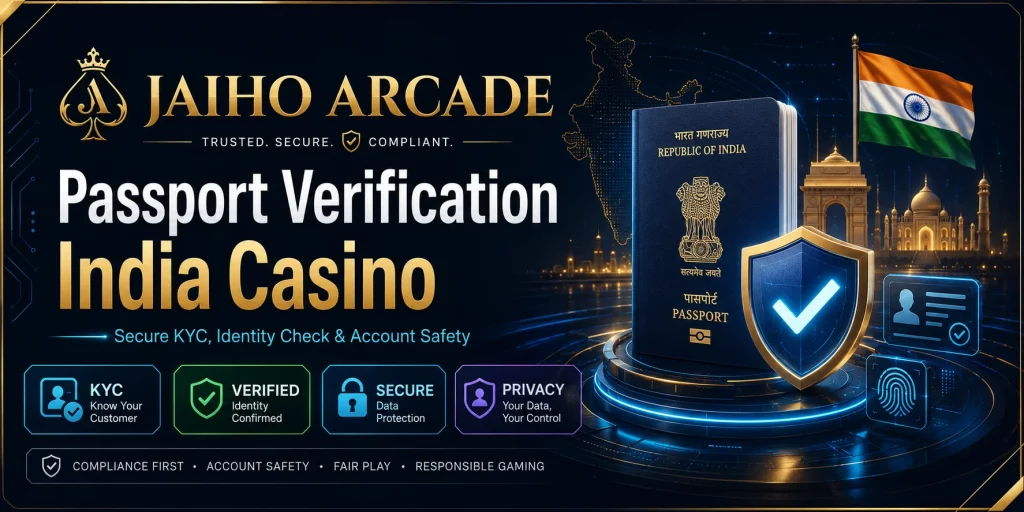
The second point is address evidence. Many passport reviews fail because users upload only the front identity page and forget the address page. If the platform asks for residential confirmation, the identity page alone may not be enough. The address section must be visible where required, especially when the account profile uses the passport as proof of present address. A useful guide should make this clear before the user reaches the upload step.
The third point is secure access. A user should be able to start document review after Login, inside the protected account area, not through informal messaging or third-party contacts. This matters because a passport contains sensitive information that can be misused if shared carelessly. A casino verification page should tell users to avoid public chats, unofficial agents, unknown email addresses, and unsecured file-sharing tools.
The fourth point is registration accuracy. During Sign up, the user should enter the same legal name and date of birth shown on official documents. A small spelling difference may lead to manual review; a major mismatch can lead to rejection. This is especially relevant in India, where names may appear with initials, expanded surnames, regional spellings, or different order across documents. A strong page should explain this without blaming the user.
Passport verification should also be separated from entertainment content. This page is not about game categories or promotions. It is an account trust page. The language should be precise, neutral, and focused on compliance. Readers should understand that verification helps protect their account, confirms eligibility, and supports safer platform operations.
| Passport Verification Element | What Reviewers Check | Common User Mistake | Useful Official Reference |
|---|---|---|---|
| Identity Page Photo, name, passport number, date of birth, issue and expiry details. | The account holder’s legal identity is compared with the profile name and age details. | Uploading a blurred image, cropped page, expired passport, or file where the passport number is unreadable. | Passport Seva |
| Address Page Residential address printed in the passport record. | The platform checks whether the visible address supports the address entered in the account profile. | Submitting only the photo page when the review requires proof of current residence. | Passport Seva Documents |
| Aadhaar Context Aadhaar or e-Aadhaar may be used in some Indian verification contexts. | Where accepted, the document may support identity or address confirmation subject to validation rules. | Assuming Aadhaar is always interchangeable with passport review requirements. | UIDAI |
| Financial KYC Context Identity and address checks are common across regulated financial workflows. | Consistency between identity details, payment records, and account ownership may be reviewed. | Using different names across account profile, payment method, and document upload. | Reserve Bank of India |
A proper passport verification guide should explain that the passport must be current and complete. If the passport is expired, damaged, partly hidden, or heavily compressed, the review team may not be able to validate it. The same applies when users cover important fields. Redaction can be useful for privacy, but only if the platform allows it and only if required fields remain visible. A user should never guess which details can be hidden.
For Indian users, the passport address page deserves special attention. Some people move after receiving their passport, and their current residence may no longer match the printed address. In that case, the passport may still support identity, but it may not fully support current address verification. The platform may request an additional address document such as a bank statement, utility bill, voter ID, Aadhaar address record, or another accepted proof. This should be explained clearly so users understand why a passport alone may not always finish the process.
The page should also describe why a passport review may enter manual verification. Manual review can happen when the file is readable but not straightforward. Examples include name order differences, old address details, unclear scans, glare on the laminated page, mismatched birth dates, or documents issued under an earlier name. A manual review does not automatically mean rejection. It means the platform needs a person to evaluate the evidence instead of relying only on automated checks.
Passport verification is also linked to age controls. A casino-related platform should not rely on a simple checkbox to confirm that a user is an adult. Date of birth verification helps prevent underage access and supports responsible account management. This is especially important because gambling-related services must be handled carefully, and users who do not meet age or location requirements should not be allowed to continue.
Data protection should be part of the same explanation. A passport contains enough information to create serious privacy risk if mishandled. The page should advise users to upload files only through secure, official account tools, check the page address before uploading, and avoid sending passport images to informal support contacts. It should also explain that support teams should not request documents in public comments or social media threads.
A strong Jaiho Arcade page should use internal linking naturally. From this passport verification guide, readers can be directed to the account verification guide, payment review information, address proof instructions, responsible gambling policy, and support contact page. These internal references should feel helpful, not forced. A compliance page works best when it connects related trust topics into one clear user journey.
Passport verification is not a guarantee of access. It is one part of a broader review that may include age, location, payment ownership, account behaviour, and platform rules. If the user is not eligible under applicable law or the platform’s terms, a valid passport does not override those limits. This distinction is important because a responsible site should never present document upload as a way to bypass legal or safety controls.
The main purpose of this page is clarity. Users should finish the section knowing which passport pages may be needed, why account details must match, when additional proof may be requested, and how to protect their personal data during upload. That is the foundation of a serious passport verification guide for an Indian casino-related account.
How Passport Verification Usually Works on an Indian Casino Account
Passport verification works best when users understand that the process is not a single click approval but a layered review of identity, address relevance, document quality, and account consistency. On a platform such as Jaiho Arcade, the verification team may compare the passport with the registration details, check whether the document is still valid, and confirm that the person using the account is old enough and eligible to pass KYC checks. This is why a passport review page should explain the logic behind each step instead of giving only a short list of accepted documents.
In practice, the review normally starts with the passport identity page. The platform checks the legal name, date of birth, passport number, issue date, expiry date, and visible photograph. If the uploaded image is sharp and complete, the system can move to a deeper consistency check. If the file is blurred, cut off at the edges, or compressed so heavily that numbers become unclear, the user may be asked to submit a better copy. A clean passport image saves time because it reduces manual handling and lowers the chance of misunderstanding.
The next stage is profile comparison. The review team needs to see whether the account information matches the document in a reasonable way. This includes spelling, date of birth, and in some cases the residential information attached to the account. In India, name formatting can vary between documents, so a careful platform should distinguish between small differences and major mismatches. A missing middle name may be manageable, but a completely different surname, a different birth year, or a passport belonging to another person should immediately raise concern.
Passport verification also matters because it supports age control. Casino-related accounts should not rely only on a self-declared age field. A passport is one of the clearest ways to verify adulthood, and that matters for legal access, responsible gambling standards, and account integrity. A serious page should make this point directly: the passport is used not only to confirm identity but also to make sure the account belongs to an adult user. If the age requirement is not met, the verification flow should stop regardless of any other detail.
For Indian users, there is another important issue: a passport may confirm identity strongly, but it does not always settle current address questions on its own. Some users have moved since their passport was issued, while others may have older residential details in the document. In those situations, the passport can still support identity verification, but the platform may ask for extra address evidence. This should be linked naturally to the site’s <a href=”/proof-of-address/”>proof of address guide</a>, so users understand why an additional document may be needed even when the passport itself is genuine.
Mobile submission is also part of the user experience. Many players manage their account through a browser or an Apk, and that can affect file quality. A passport photo taken on a phone in poor light may produce glare across the laminated page or blur the printed data. The page should advise users to place the passport on a flat surface, capture the full page, avoid shadows, and check readability before uploading. This sounds simple, yet it is one of the most common reasons an otherwise valid document ends up in manual review.
The chart reflects how confidence rises when the passport file is clear and the account data aligns with it. At the same time, the need for manual review falls when the document is legible and internally consistent. This is helpful for readers because it shows that verification is not random. Approval becomes more likely when each checkpoint supports the same user identity.
A well-written passport verification page should also explain how security and transaction review interact. If the passport name does not match the payment method name, or if the user attempts sensitive actions before completing KYC, extra checks may appear. That is not unusual. The platform is trying to confirm ownership and reduce the risk of chargebacks, fraudulent access, and identity misuse. If the site offers any promotional credit or a Bonus, the user should understand that identity checks may still be required before certain account privileges are fully processed.
To make the process easier to follow, the page should present the passport journey in a structured, visual format. A vertical flow layout works especially well because it lets the user understand each stage in sequence, from document preparation to final decision, without turning the content into a cold compliance wall.
What makes this process trustworthy is clarity. Users should know what the passport is meant to confirm, what kinds of mismatches create delay, and why extra evidence may sometimes be required. A serious Jaiho Arcade page should also remind readers that KYC is not a marketing step. It is a protection layer designed to support lawful access, prevent identity abuse, and improve confidence in the account environment.
The most useful tone is calm and practical. Instead of promising instant approval, the page should teach users how to avoid predictable mistakes: incomplete images, mismatched names, forgotten address pages, old passport details, or uploads sent through unsafe channels. When these points are explained with precision, the passport verification guide feels like part of a real trust centre rather than filler content on a casino site.
Manual Review, File Security, and Passport Mismatch Handling
Passport verification can move into manual review when the uploaded file is genuine but not simple enough for automatic approval. This happens when the image is readable yet the account details do not fully align, when the passport address is old, when the name format differs from the registration record, or when the platform needs extra confirmation before allowing sensitive account actions. A strong Jaiho Arcade page should explain this stage clearly because manual review is often misunderstood. It is not always a rejection. It is a closer inspection of details that need human judgement.
Indian passport records may include spelling patterns, initials, regional name structures, or address formats that do not match modern digital forms perfectly. A user may register with a shortened name while the passport shows the full legal version. Another user may enter a current rental address, while the passport still carries a family home address. In both situations, the platform may need to decide whether the mismatch is reasonable, whether another document is required, or whether the account profile must be corrected before verification continues.
This is where the quality of the account record becomes important. If a user enters casual or incomplete information during registration, the passport review becomes harder later. The account name should not be a nickname. The date of birth should not be typed from memory if the user is unsure. The address should be formatted carefully, especially if it will later be compared against official documents. A responsible verification guide should encourage users to treat account details as legal records, not as temporary form fields.
Manual review can also be triggered by image problems. A passport page may look readable to the user, but if glare covers the passport number or the expiry date, the reviewer cannot complete the check confidently. The same applies when the page is partly hidden by fingers, a shadow, a phone reflection, or a protective cover. Users should remove the passport from plastic sleeves where safe, place it on a flat surface, and take a clean image with the full page visible.
A passport review page should also explain why document ownership matters. The passport must belong to the account holder. A family member’s passport cannot verify the user’s identity, even if both people live at the same address. This rule should be stated plainly because shared households are common in India. Verification is not checking whether an address exists; it is checking whether the account holder is the same person as the document holder.
Account safety becomes especially important when a platform offers many entertainment categories. A user browsing Slots or account pages should still find verification guidance easily from the site’s trust area, payment help, and responsible gaming information. Compliance content should not be hidden behind promotional navigation. It should be visible because document checks protect the account before higher-risk actions take
The most useful passport verification page is one that tells users what to do when something goes wrong. A rejection notice should not lead to panic. If the problem is image quality, the user can take a clearer photo. If the problem is address mismatch, the user may need a newer proof of residence. If the problem is name inconsistency, the user may need to correct the account profile or provide a document that better supports the legal name. Each issue has a practical route, but the user needs clear information before resubmitting.
A platform should avoid asking for more documents than necessary. Excessive document collection can create user distrust and increases privacy risk. If the passport identity page is enough for age and identity review, the platform should not request unrelated files without a clear reason. If address confirmation is needed, the page should explain why the passport address may or may not satisfy that requirement. This balanced wording makes the site look professional and reduces the impression of arbitrary verification.
Passport verification can also interact with account restrictions. If a user changes major profile details after registration, the platform may pause activity until the new information is confirmed. This is normal for sensitive account systems. For example, changing legal name, date of birth, country, state, or payment ownership may require additional document review. Users should be told that these checks exist to protect the account and maintain platform integrity.
The site should also explain that passport verification does not override local eligibility rules. India has a complex gambling environment, and platform access can depend on state-level rules, user age, product type, and operator terms. A valid passport confirms identity; it does not automatically make every account action lawful or available. This point should be written plainly because responsible pages should not encourage users to bypass location or eligibility controls.
When the user is navigating broader casino information, verification content should remain connected to trust resources, not just entertainment pages. The site can link naturally to account security, withdrawal verification, responsible gaming, payment checks, and help centre content. Pages about Games can mention that account safety rules apply across the site, but they should not dilute the passport guide with promotional copy. This separation gives the compliance page a stronger editorial standard.
The platform should also treat document review outcomes as part of user communication. If a passport file is rejected, the message should identify the reason as specifically as possible. “Image unreadable” is better than “verification failed.” “Address page missing” is better than “document not accepted.” Clear rejection reasons reduce support tickets and prevent repeated uploads of the same unsuitable file.
For users, the safest approach is to prepare the document before opening the upload panel. They should check the passport validity, clean the page surface, avoid glare, confirm the account name, and understand whether the identity page alone is enough. If the review request also mentions address verification, users should be ready to provide the address page or a separate accepted proof. This preparation protects both time and privacy.
A serious Jaiho Arcade verification article should be written as guidance, not persuasion. It should not push the user toward deposits, wagering, or rushed account activity. Its purpose is to explain the document process accurately, help users avoid common mistakes, and show that the site treats passport data with appropriate care. That is what makes the page credible in a competitive casino information environment.
Final Passport Verification Decisions and Long-Term Account Trust
The final stage of passport verification should be clear, documented, and easy for the user to understand. A serious casino-related platform should not leave the account holder guessing whether the document was accepted, rejected, escalated, or returned for correction. The outcome should explain what happened in plain language, especially when the passport file is not approved. A user who sees a specific reason can correct the problem faster and avoid sending repeated versions of the same unsuitable document.
For Jaiho Arcade, the passport decision stage should be treated as part of account trust. The platform is not only checking whether a passport exists. It is checking whether the document can support the account identity, age, and compliance profile. If the passport confirms the user’s legal name and date of birth but does not support the current address, the account may still need a separate residence document. If the passport is valid but the image is cropped, the user may need to upload a clearer file. If the passport belongs to another person, the document should not be accepted for that account.
A well-written verification page should explain the difference between rejection and rework. Rework usually means that the platform needs a better file or more complete evidence. Rejection may mean that the document is unsupported, expired, inconsistent, or not owned by the account holder. This distinction matters because users often interpret any failed upload as a serious account problem. In reality, many passport checks fail because of simple technical mistakes: glare, compression, missing address page, unreadable date, or incomplete corners.
The diagram shows why passport verification is not based on one factor. A passport can be strong for identity and age confirmation while still weaker for current address support. This is common when the user has moved since the passport was issued. The platform may approve identity verification but still request another document for residence confirmation. A clear page should explain this before the user becomes frustrated by a second request.
A final passport verification guide should also explain how account updates affect document status. If the user changes their legal name, residential state, phone number, or payment method, the platform may review the account again. This does not mean the previous verification was useless. It means the account profile has changed enough to require fresh consistency checks. Sensitive platforms must treat major profile changes carefully because they can indicate ordinary life changes or possible account takeover attempts.
Passport data also needs careful storage and access control. A user should know that uploaded passport files are sensitive personal documents and should only be handled through official secure systems. The page should avoid vague claims such as “your data is always safe” unless the site can support them with a real privacy policy. Better wording is more precise: documents should be uploaded through protected account tools, access should be limited, and users should be directed to the privacy policy for retention and processing details.
The dual-card format gives the page a practical dashboard feel. It shows users what an approval-ready passport looks like and what usually sends the file back for correction. This is better than a long list of warnings because it lets the user compare their own submission with real review criteria before uploading. A verification page should help users prevent mistakes, not simply react to them after rejection.
The final section should also explain how passport verification connects to support and education resources. A Jaiho Arcade trust page can point readers to a dedicated FAQ for document uploads, a privacy policy for data retention, account security guidance, payment verification rules, and responsible gaming information. These internal references should be written naturally inside the content, while external Links to official Indian resources should be used only where they add authority and should carry nofollow attributes when placed in tables or reference sections.
The platform should also avoid overpromising review speed. A passport file may pass quickly when all details are clear, but manual checks can take longer when there are inconsistencies. Instead of giving unrealistic guarantees, the page should tell users how to reduce delay: submit the correct page, use a clear image, make sure the profile matches, avoid third-party documents, and respond to support requests through official account channels only.
A strong passport verification article should end with a trust-based message. Passport checks are not there to make the account feel complicated. They exist to confirm identity, protect sensitive features, prevent underage or false access, and reduce misuse. In a casino-related environment, that distinction matters. The page should never frame document upload as a way to bypass eligibility rules or speed into risky activity. It should frame verification as part of responsible account management.
For Indian users, this is especially important because legal access can depend on age, location, platform terms, and the type of product involved. A passport confirms who the user is; it does not remove the need to follow local rules. Jaiho Arcade should make that clear with precise, neutral wording. The strongest compliance pages do not sound promotional. They sound useful, cautious, and professionally maintained.
When written properly, a passport verification page becomes more than a support article. It becomes part of the site’s credibility. It explains what the platform checks, why the check exists, how users can protect their data, and what to do when a document is not accepted. That is the kind of content that makes a casino information site look like a real expert resource instead of a generic landing page.






Comments